Sea it, Save it, Walk it
where it began
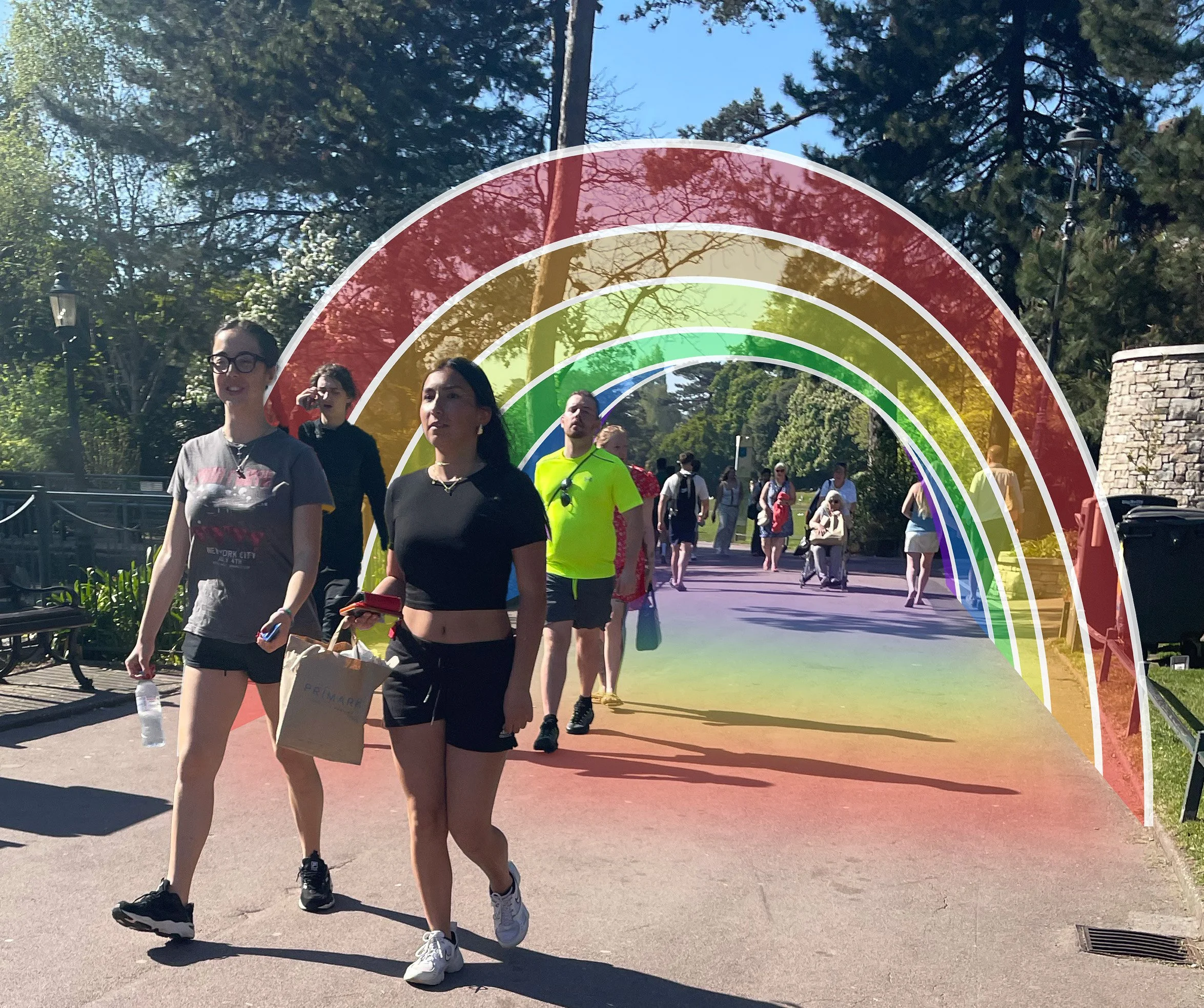

The goal was clear: create an experience rooted in the outdoors, but enhanced through screen-based interaction.
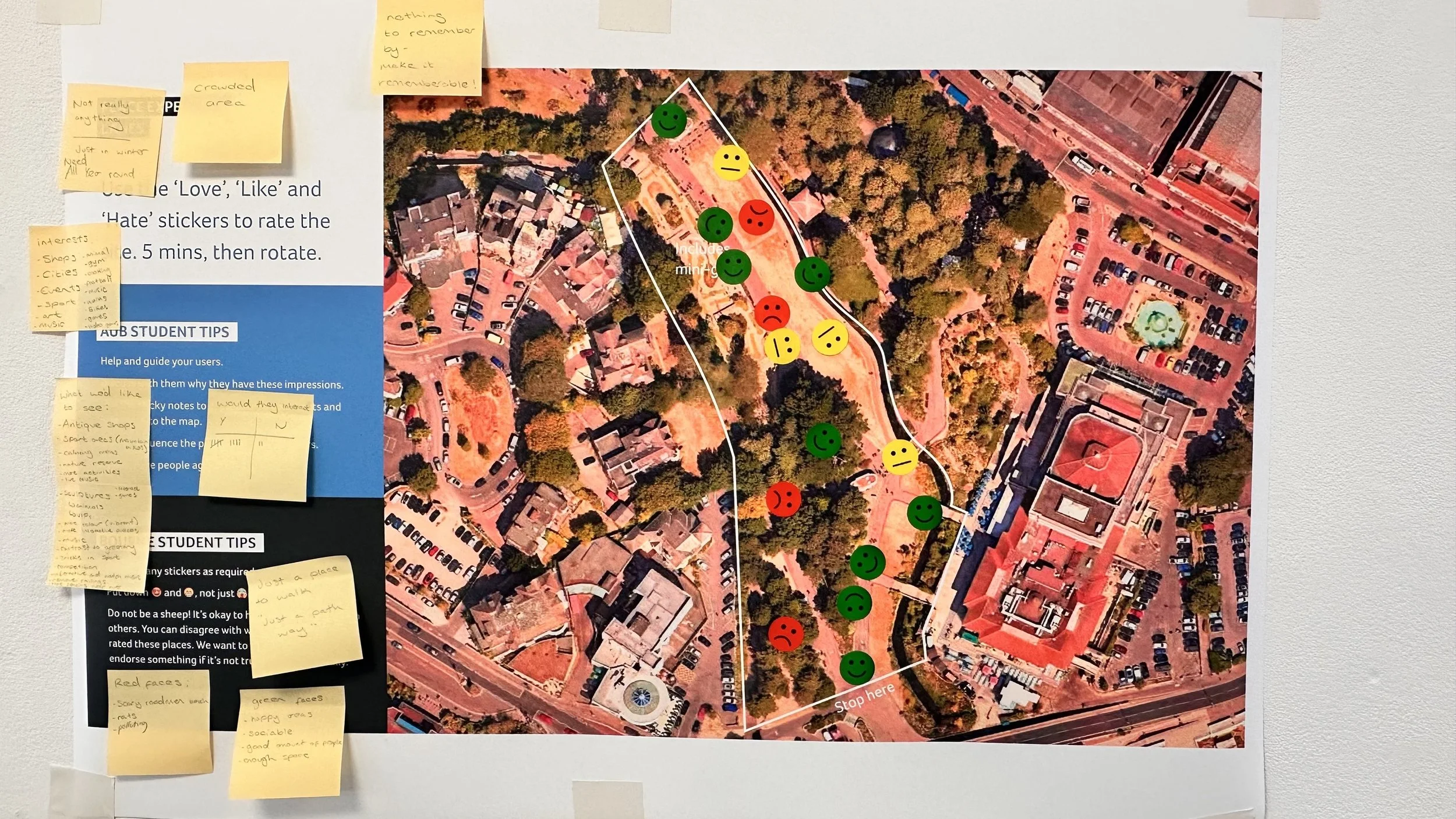
The journey began with a simple but pressing observation: in areas around The Lanes, Bournemouth. People described ‘happy’ zones as clean, social, and open. But in ‘sad’ zones, issues like litter, rats, and anti-social behaviour dominated.
We asked ourselves — how can we re-engage young people with nature in these areas?”
Advertising
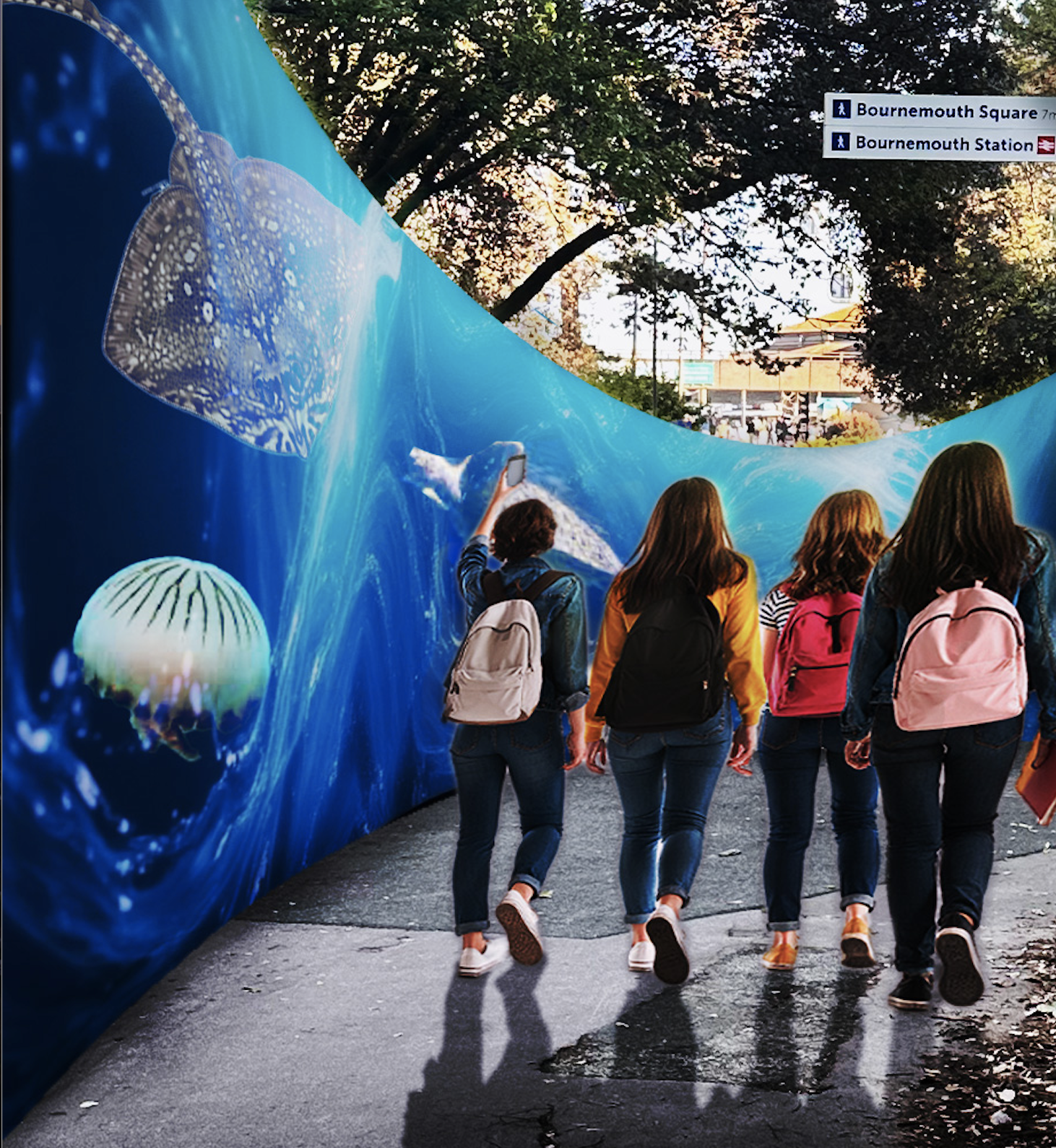
A key feature of our project is the immersive tunnel, inspired by Dorset’s sea life and set along Bournemouth’s Lower Gardens. Through high-definition projections, it transforms the path into a vibrant, interactive experience to create a modern dreamlike atmosphere.


-
Photoshop skills
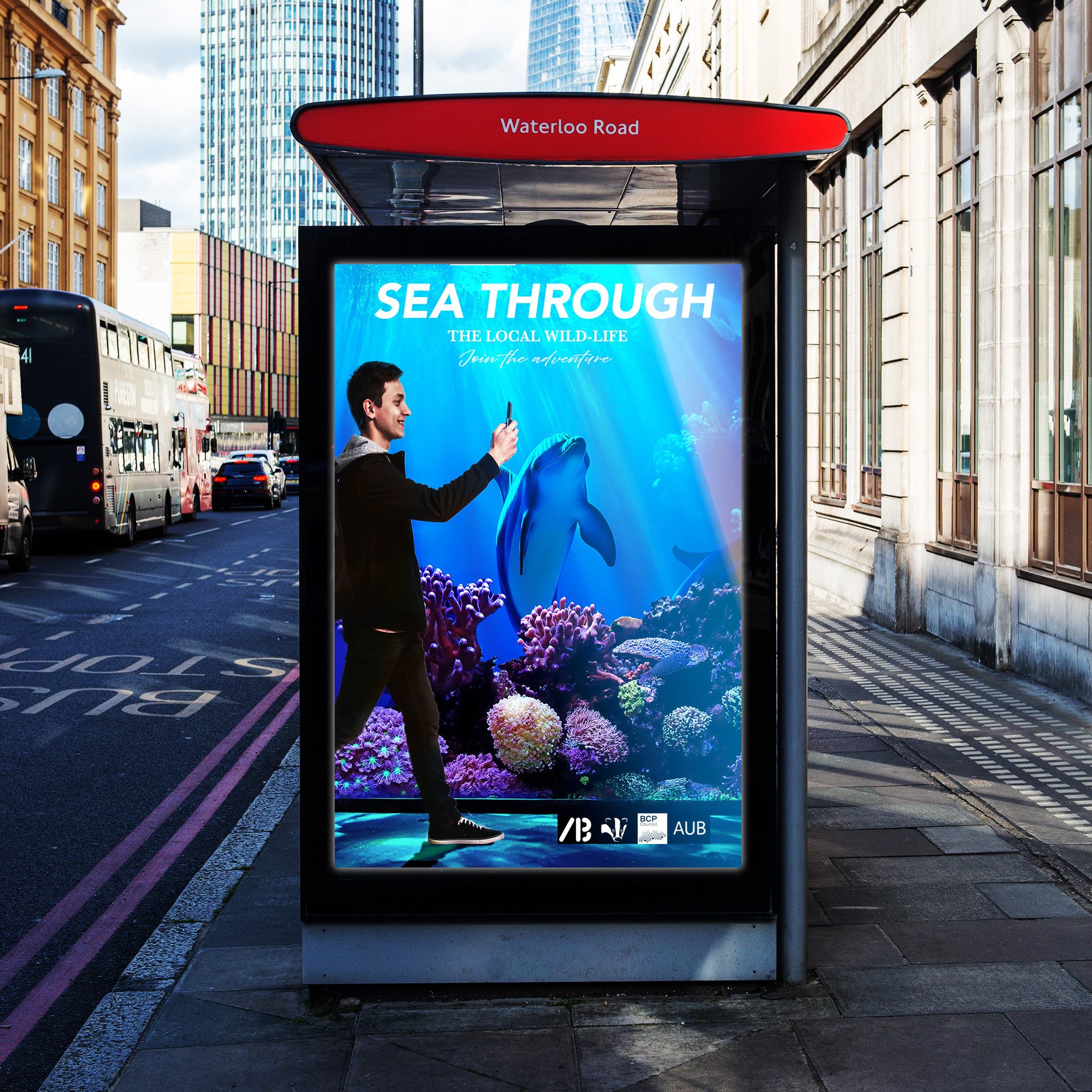
Achieving this look required extensive work in Photoshop, particularly in integrating human figures and natural elements like fish into the environment. One of the biggest challenges was adjusting hue, saturation, lighting, and shadows to ensure every element belonged to the image.
-
Beyond the brand
My goal was to create hyper-realistic visuals that would immerse the viewer from the first glance. I wanted the imagery to act as a visual gateway into the brand, capturing attention before revealing the deeper purpose behind the concept.
-
Materials
We considered material choice as a fundamental part of our design process, which led us to explore screen-projection materials. These materials are lightweight, flexible, and highly adaptable, making them ideal for the tunnel structure we envisioned
-
Sustainability
From concept to execution, sustainability was embedded in the design, ensuring the structure had minimal environmental impact while maximising its value as a safe, engaging, and eco-conscious urban intervention.
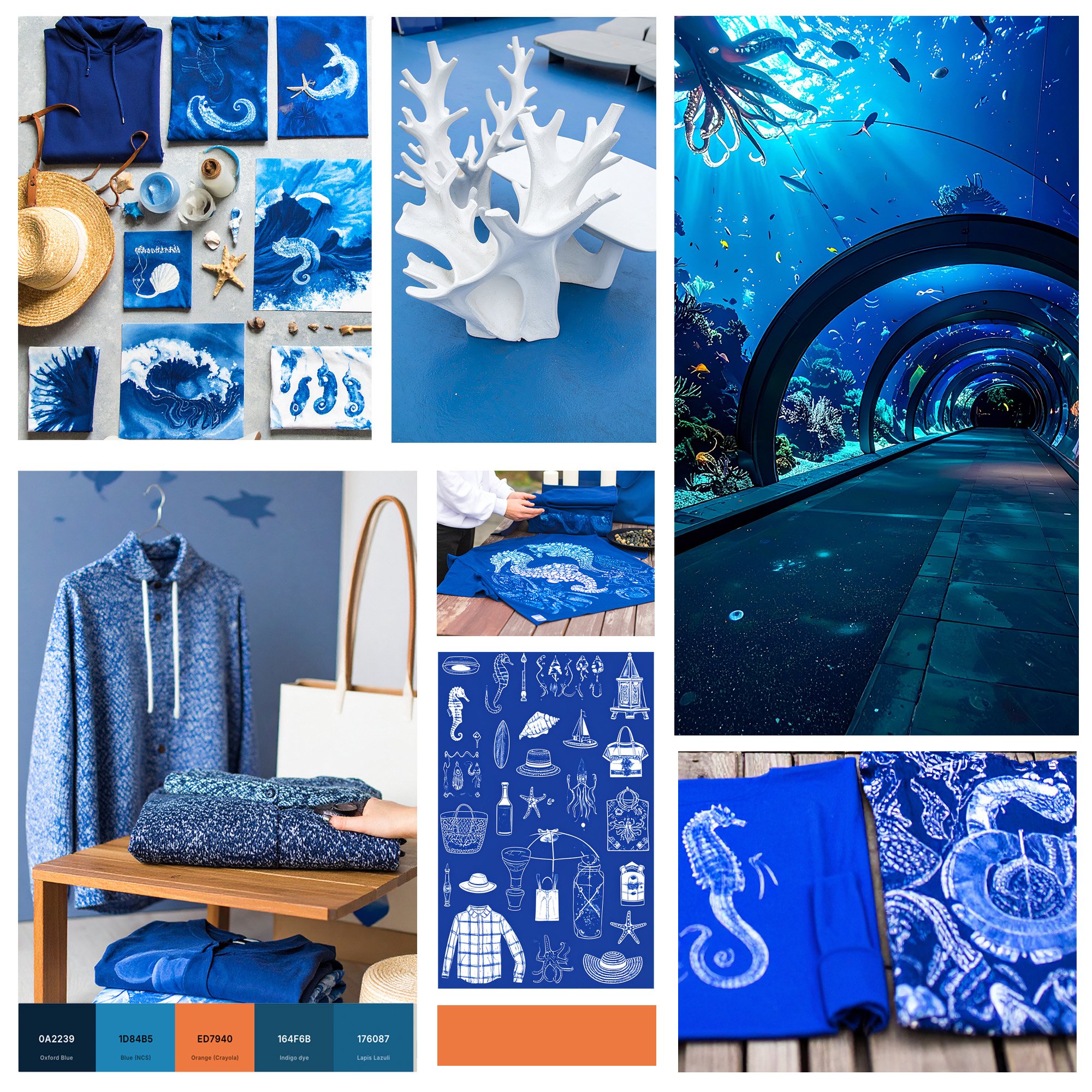
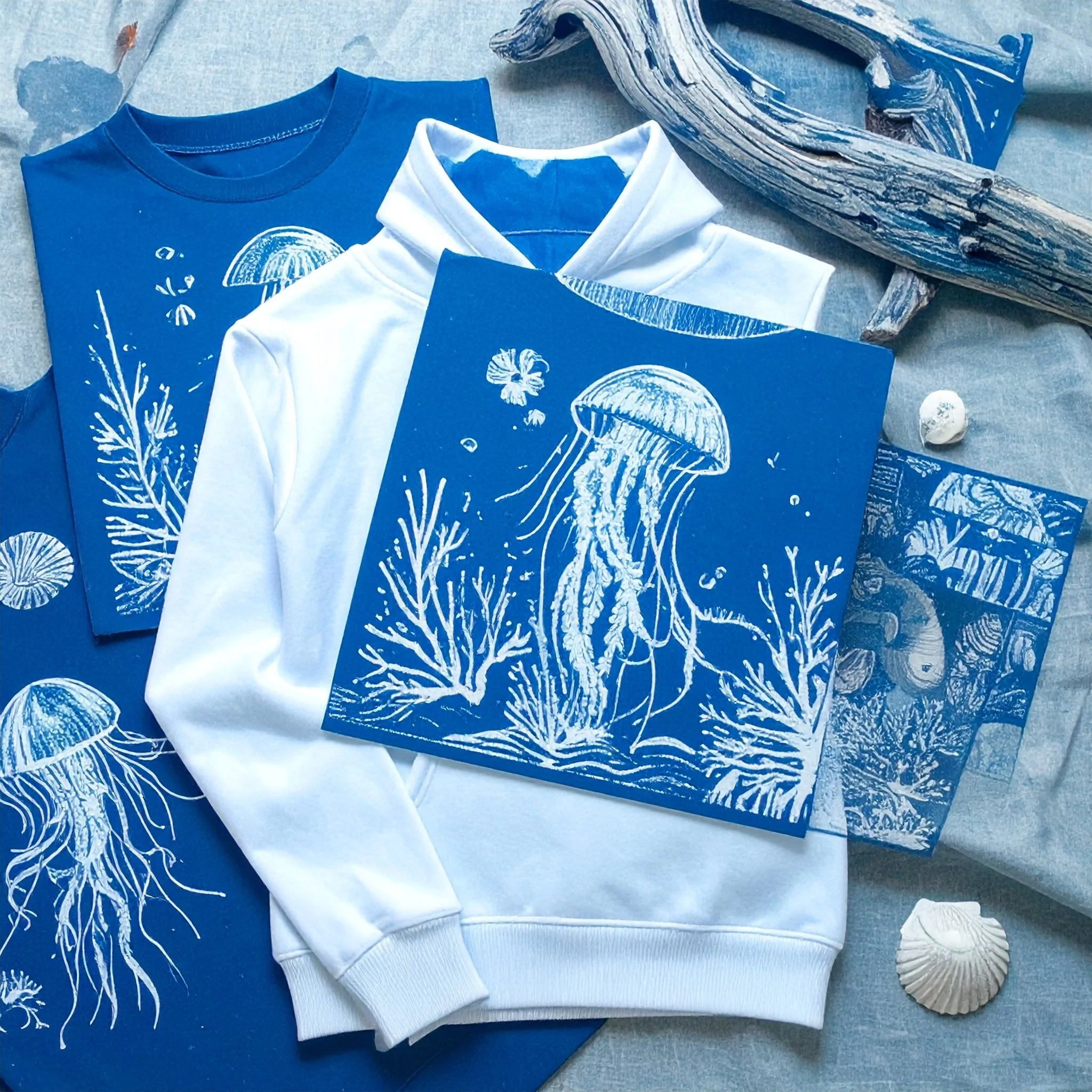
These visuals I made used cool, calming colours and natural shapes inspired by the sea.
This moodboard guided our design choices across projection screens, app interfaces, and workshop material, always keeping it engaging, playful, and inviting for our target audience.
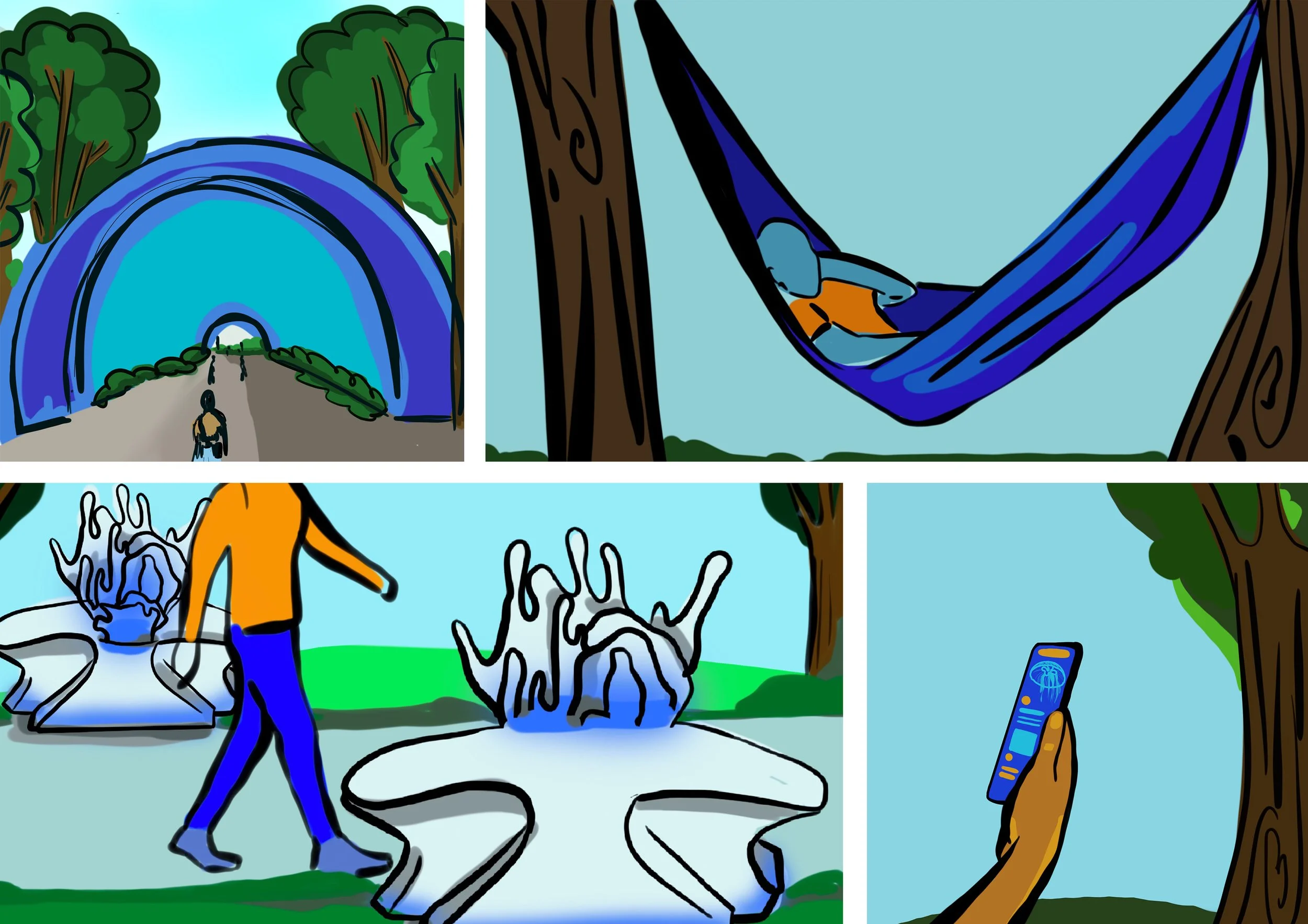
Designing the Story: From Sketch to Screen
-
The app includes an AR filter that allows users to scan sea animals projected within the installation and instantly learn more about them. As users explore, they can collect virtual shells—these act as reward points. These points can then be exchanged for discounts, entry to natural attractions, or interactive prints ofsea animals to enjoy at home. The app also features a small shop, with proceeds going directly to the Dorset Wildlife Trust, supporting their work in local environmental conservation. This approach not only adds a playful and educational layer to the intervention but also builds a meaningful bridge between technology, sustainability, and community action.
-
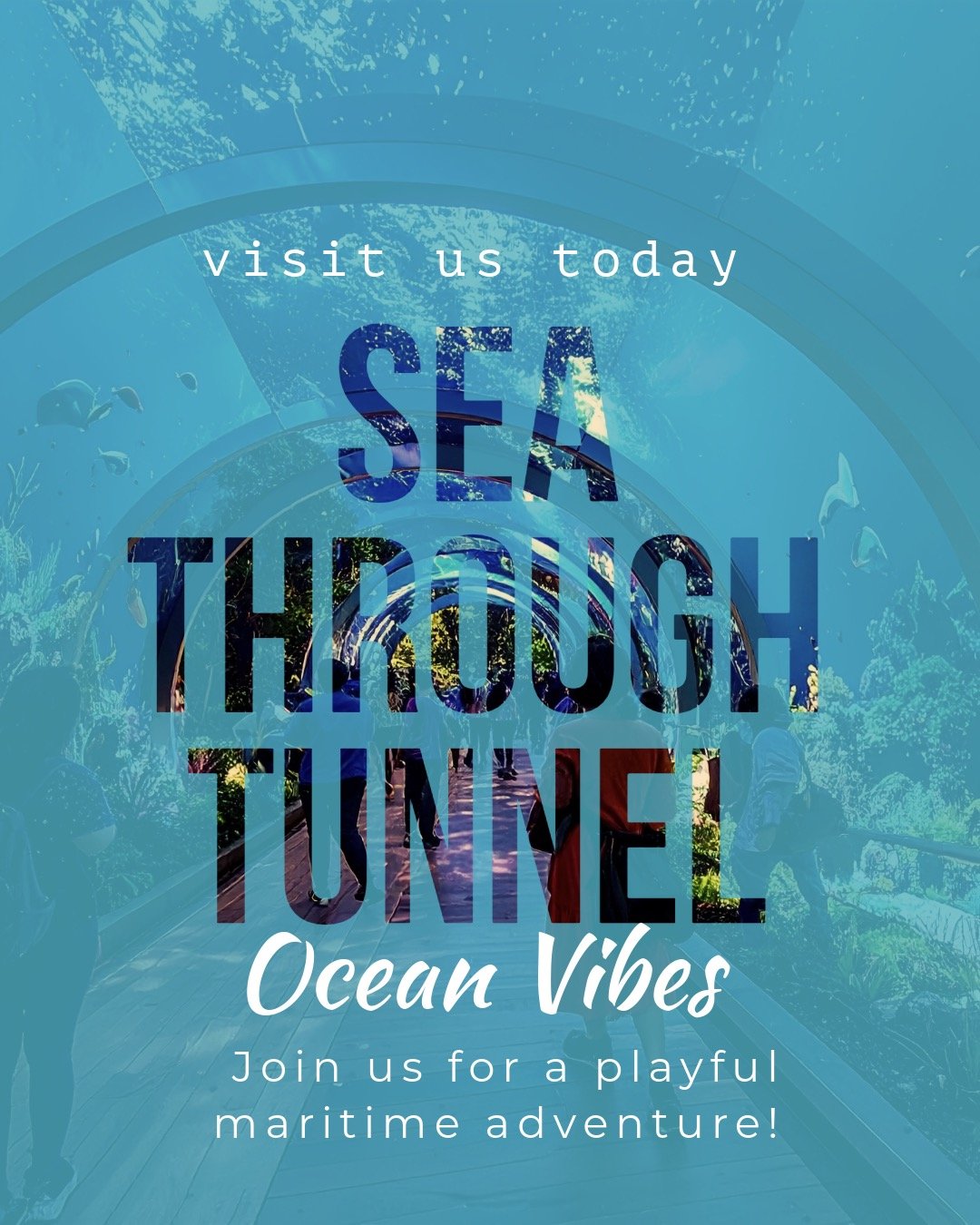
Developing the social platform and designing the ad campaign materials was one of the most enjoyable parts of the project for me. I felt it was essential to include this element because our user is highly connected to the digital world, and many of their first impressions and interactions would likely happen online. To make the urban intervention more appealing and accessible, I wanted to create a strong digital presence that could spark interest and curiosity before users even visited the physical space. By introducing the brand through engaging visuals and clear messaging on social media, we could connect with the user in a space they’re already comfortable with. This digital-first approach was designed to lead them toward real-world exploration, helping bridge the gap between online engagement and outdoor activity.
-
The user offered thoughtful and valuable insights into how the visuals and concepts made him feel. He appreciated the balance between the tunnel installation and the open spaces, noting that the variety made the experience more engaging. He also said the bright, luminescent visuals made him feel safer walking around the gardens, especially in areas that are usually darker. He was particularly enthusiastic about the artistic clothing upcycling workshop, as he saw it as a creative and sustainable way to involve the community. He even said the concept felt more immersive than his visit to the aquarium, as it gave him the sensation of actually being underwater. He liked how the project blended natural and digital elements, and he saw the interactive point-collecting system as a fun way to enjoy the space with friends—something he could see himself doing regularly.
Speculating Forward
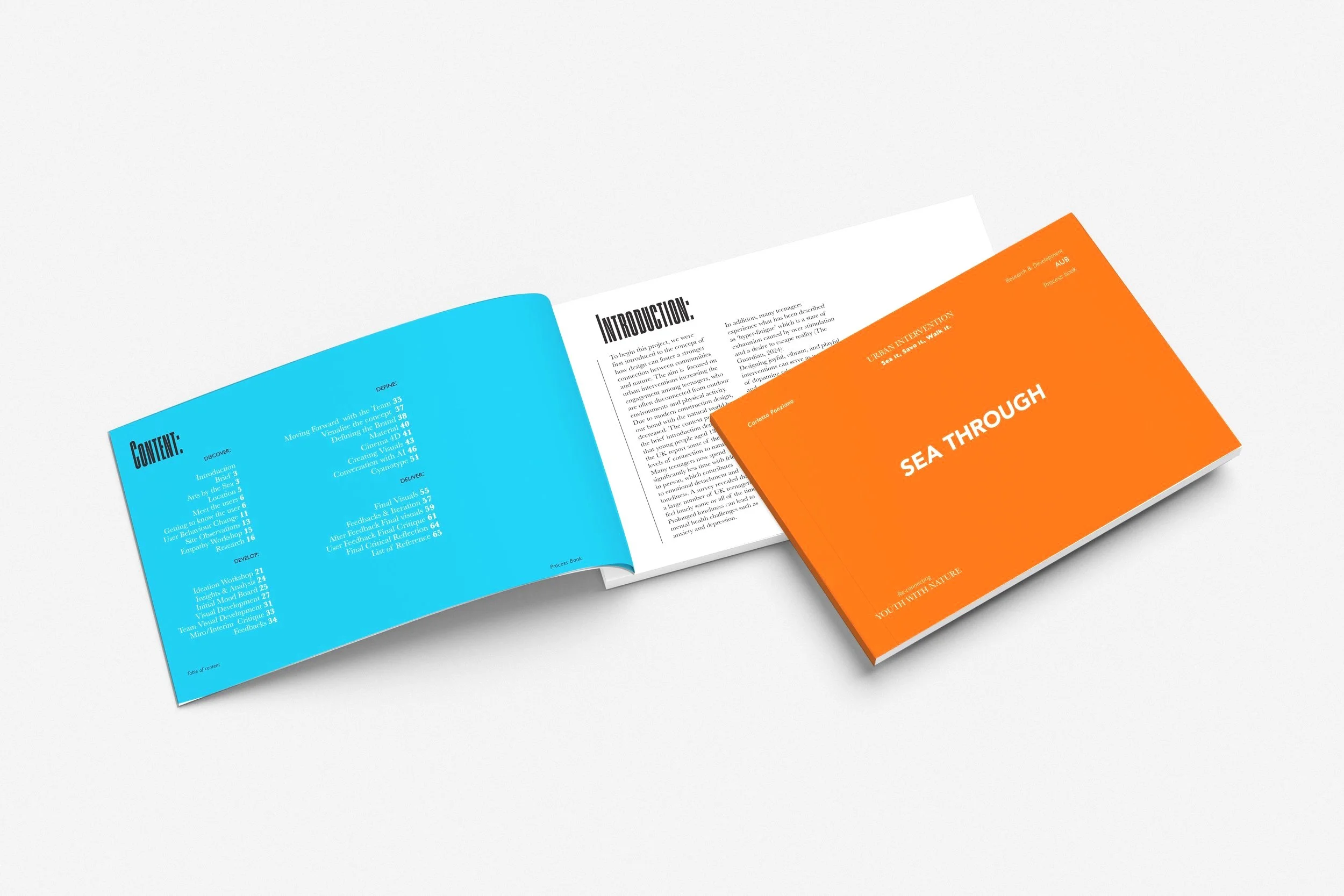
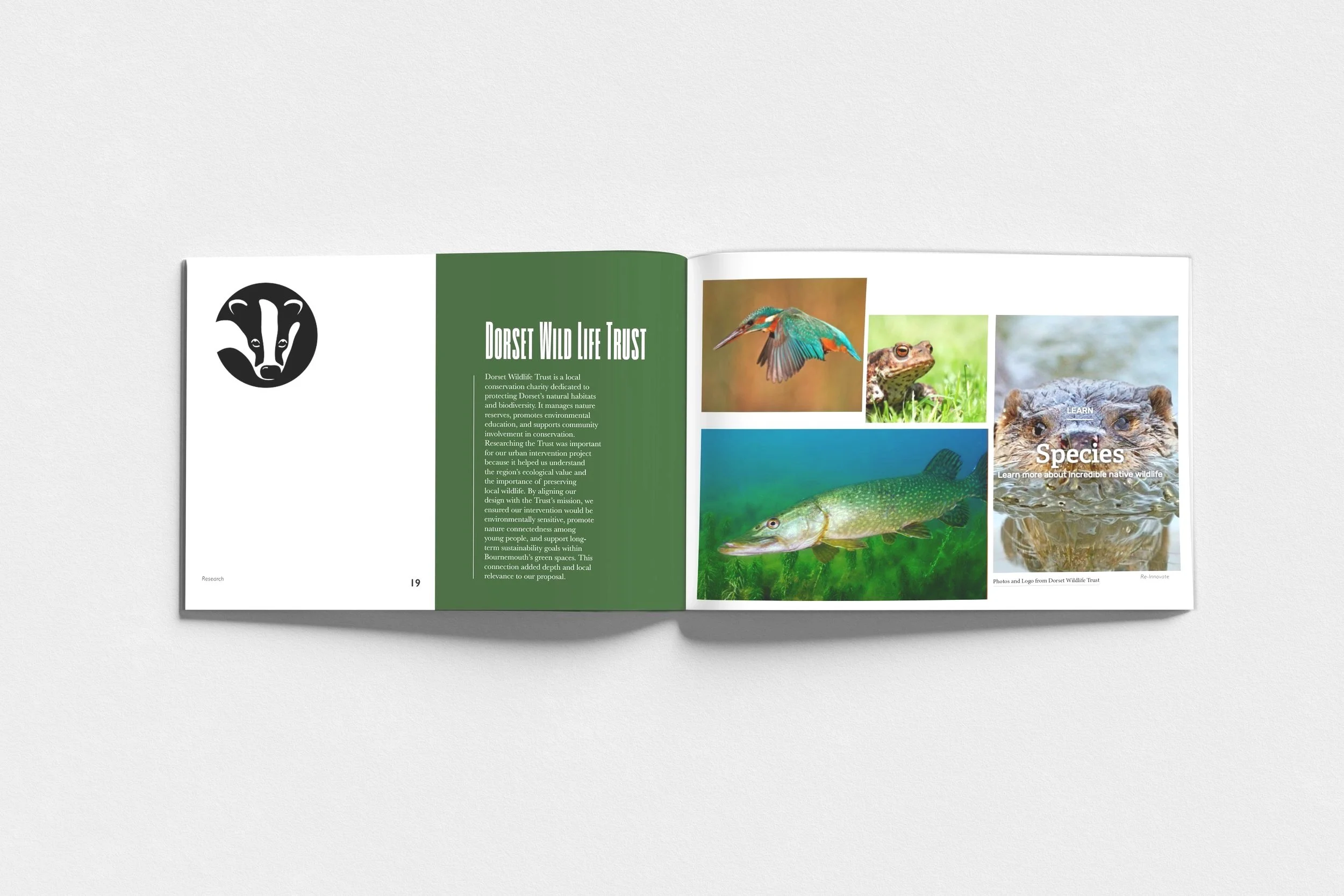
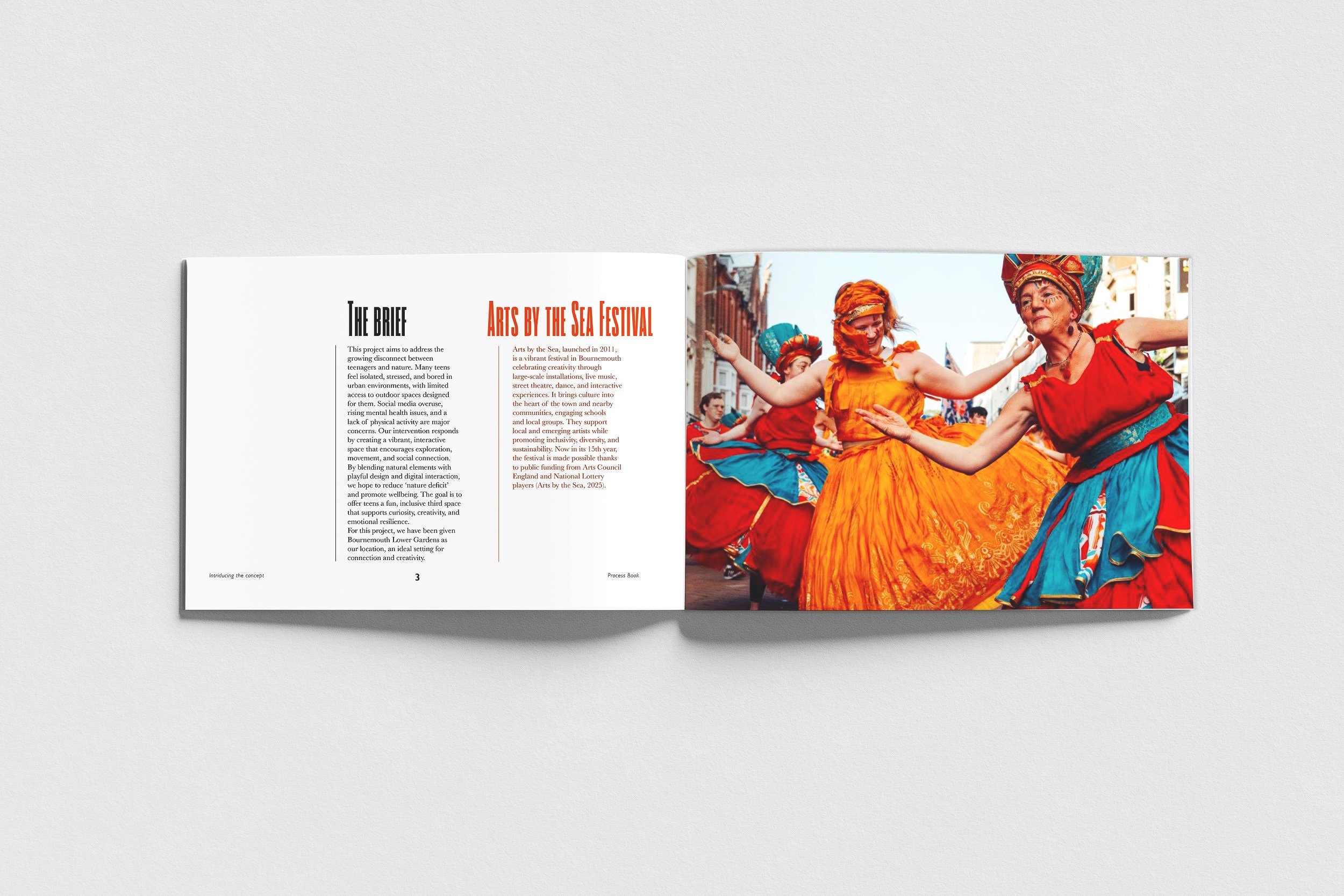
To elevate the visuals and storytelling of this project, I created and printed a landscape A5 process book that highlights key insights and the analysis behind its development.